Average Reviews:

(More customer reviews)For the amount of addtional parts I put in to build this thing, it's worth it if you bargain hunt. To get this kit in the air, I spent $26 for a Hobbyking USA warehouse radio w/micro receiver, $10 for a GWS 2-amp brushed ESC, and $6 for two servos (already had the battery). I enjoyed this plane so much after not liking it at first sight that I bought a second one from Hobbyzone. I also have the Hobbyzone Champ that came complete w/TX, ESC/receiver, everything ready and to me, the Champ offered about the same value. However, this plane teaches the beginner RC plane modeler about building, about center of gravity, about really slow flying for a big airplane. The Hobbyzone Champ is awesome for a first timer but this GWS plane is good for a second plane and to get into building. I checked GWS' RC forums and they have a great reputation for making affordable quality kits.
It's difficult and expensive to complete this Pico Cub with the suggested micro parts (ie GWS receiver and GWS servos) but if you go to your local hobby shop you can get other brands that are lighter and cheaper, then it's wprth it. This Pico model has thin foam and came cracked in both fuselages. Had to glue and tape before even starting to fit the pieces. The retail box packing was flimsy but the pieces inside were packed okay so the seller should have placed it in a more rugged outer box. I will continue to buy from toymaker GWS in the future.
Two months later, it's built and flown several times and it's an okay, probably just slightly average value in terms of cash spent to the fun of flying this plane. The fuselage foam is old tech but the wing and tail section is better. The push rods are old tech - GWS needs to go with carbon fiber.
Experienced builders with spare parts that's needed to complete this plane will have an easier time. But they would probably know to buy foam sheets from a Home Depot and make a plane that flies as wellas this for half the cost.
Only recommend this for experienced builders but the value comes in the joy of flying this at a nice slow speed. It's also a very good plane to teach new flyers or just to amaze kids with by it's floating slow speed.
It's a sight to see this medium sized flyer (40" wingspan) floating along at 5 mph or even less with the slightest wind.
Another plus is this plane can carry the keychain camera with ease and doesn't struggle unlike the HobbyZone Champ. Also, you can see this plane clearly at 300 yards away unlike the Champ that blends into the background or seemingly disappears from view due to its small size compared to this GWS model.
Here's two Youtube videos I made using/flying this plane:
_SNE--lYEt4
ygCgxuLurpA
Click Here to see more reviews about:
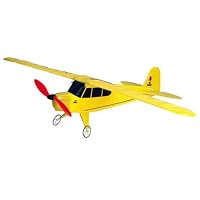
Pico J-3 FD ARF Slow Flyer (Fuselage Version)What could be more fun than flying a scale-looking J-3 Cub in the grassy comfort of your favorite park on a still, sunny afternoon-or-when Mother Nature is not as hospitable, being able to fly that same plane in the climate-controlled comfort of the local gymnasium? We couldn't think of much else either-at least we couldn't after we flew the GWS Pico Cub FD. What a blast! This fantastic flying foam kit is quite possibly the best flying slow flyer we have seen to date. The Pico Cub FD goes together easily in as little as two hours. Just join the fuselage halves, glue on the tail surfaces, join the wing halves, install the power system and flightpack, and fasten the wing with a rubber band. The kit includes an IPS power system and requires a micro flightpack that is not included with the kit. Completely assembled, the kit weighs just over 8 1/2 ounces.We found for both performance and simplicity's sake, the GWS Naro Flightpack is the ideal choice for this kit, since GWS designed the Pico Cub FD with this system in mind. The Naro Flightpack is made up of two GWS Naro BB Servos, a GWS 2-amp speed control, a GWS 4-channel micro-receiver, and a 270mAh 7.2V battery pack.We had an absolute blast flying the Pico Cub FD. Possibly the coolest thingabout this plane is that it can be flown indoors or outdoors in light wind. The plane flies in the 6-11 mph range, which makes it slightly faster than some indoor slow flyers and a little slower than most park flyers. Maneuverability rather than speed is most important when you're talking slow or park flyers, and this is where the little Pico Cub FD excels. Slow speed handling is excellent, with positive control authority right up to the stall, which, incidentally, is so tame as to be a non-event.We don't expect the Pico Cub FD will break any time-to-climb records, but the included IPS power system provides ample juice for tricks like rolling takeoffs and diving entries into loops. We consistently enjoyed
 Get 15% OFF
Click here for more information about Pico J-3 FD ARF Slow Flyer (Fuselage Version)